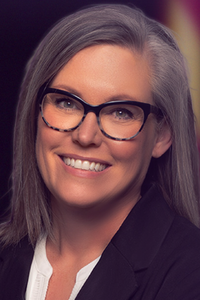
Democrat Katie Hobbs won a second term as Arizona governor on Tuesday, Nov. 3, defeating Republican congressman Andy Biggs, CBS News projected on election night. AZFamily reported that the Associated Press contributed to its coverage.
Closer to home, the Scottsdale-area 1st Congressional District race between Democrat Amish Shah and Republican Jay Feely remained too close to call. As of early Wednesday, Shah led Feely 52.5% to 45.5%, KTAR reported. The Associated Press had not called the race, according to AZFamily.
The district covers parts of Scottsdale, Paradise Valley, Fountain Hills, Cave Creek and north Phoenix. It opened up after Republican U.S. Rep. David Schweikert ran for governor instead of seeking reelection, KJZZ reported. Schweikert had represented the area for 15 years.
Shah, a former state legislator and emergency room doctor, ran for the seat in 2024 but lost to Schweikert, according to KJZZ. Feely, a former Arizona Cardinals kicker, won the Republican primary with President Donald Trump's endorsement.
Governor's race
Unofficial election-night results showed Hobbs with 58% of votes counted to Biggs's 40%, the Arizona Mirror reported. Those votes were all early ballots returned before Election Day. Hundreds of thousands of ballots cast or dropped off on Nov. 3 had yet to be counted, the Mirror reported.
Results are not official until all votes are counted and verified by the Secretary of State's Office, a process that could take days, according to KOLD.
Hobbs ran unopposed in the Democratic primary, according to KJZZ. She previously served four years as secretary of state and served in the state Legislature from 2010 to 2020. Her running mate, John Giles, served as Mesa's mayor from 2014 to 2025, according to a Yahoo News election guide. Giles becomes Arizona's first lieutenant governor.
Biggs was elected to Congress in 2016 and previously served in the Arizona State Legislature, according to FOX 10 Phoenix. He chaired the conservative Freedom Caucus for two years, KJZZ reported. His running mate, Sine Kerr, most recently served as the U.S. Department of Agriculture's Farm Service Agency state executive director for Arizona, according to the Yahoo News guide.
Barrett Marson, a Republican public relations consultant, told the Arizona Capitol Times that Biggs faced a challenge reaching beyond his conservative base. "He's literally having to learn how to speak their language, and it's not going well, given his history," Marson said.
What the governor faces next
The next governor will navigate Colorado River water negotiations, cost-of-living pressures, school funding decisions and data center policy, the Capitol Times reported. Arizona faces cuts of up to 77% to its Colorado River supply by 2028 if the state cannot reach a negotiated deal with six other basin states.
Biggs proposed eliminating the state's 2.5% flat income tax during his potential first term. That tax made up 31% of the state's fiscal year 2026 budget, the Capitol Times reported. Hobbs pointed to first-term programs including down payment assistance, medical debt relief and utility bill assistance.
Both candidates support extending Proposition 123, the expired public school funding measure that drew from the state land trust. The Empowerment Scholarship Accounts (ESA) voucher program, which costs taxpayers about $1 billion a year, awaits legislative action in 2027, the Capitol Times reported.
The official statewide canvass is scheduled for Nov. 23, according to the Arizona Secretary of State's Office. Voters who cast early ballots and have signature verification issues have until 5 p.m. Sunday, Nov. 8, to resolve them.